HOKA: Jean-Luc Diard and Nicolas Mermoud. The “Clown Shoe” That Became a $2B Bonanza
Two French sports executives left comfortable corporate jobs to create a running shoe that looked like a "clown shoe"—with an absurdly thick midsole. Runners mocked it until they tried it. The Hoka's plush cushioning reduced fatigue and made downhill running feel effortless. Despite 98% of retailers rejecting the design, word spread through ultrarunners. A partnership with Deckers Brands accelerated growth, transforming a $3 million startup into a $2 billion giant by making "maximalist" running mainstream.
Listen on Spotify
Episode Recap
Jean-Luc Diard and Nicolas Mermoud weren't trying to start a running revolution. They were tired athletes seeking relief. After a brutal 101-mile ultramarathon in 2007, they wondered: why did downhill running hurt so much? Their answer reshaped an entire industry.
The "Clown Shoe" Problem
Their first prototypes were essentially foam platforms strapped to feet—looked ridiculous, performed remarkably. At the 2010 Outdoor Retailer show, most buyers walked by laughing. But those who tried them felt an immediate difference. The oversized midsole with a rocker shape wasn't fashion; it was physics. More cushioning, paradoxically, meant lighter weight and greater efficiency. Hoka proved that runners didn't need minimal shoes to be fast—they needed protection to run farther.
Bootstrapping Through Crisis
While Nike and Asics dominated running, Jean-Luc and Nico financed Hoka entirely with their own money. No VC, no board, no safety net. That meant agonizing cash flow cycles: sell a few thousand pairs, wait for payment, scramble to produce the next batch at double the size. Banks refused to lend to a "risky" shoe with clownish proportions. The founders slept on factory floors, convinced suppliers to take relationships over purchase orders. This constraint bred creativity: they focused on getting shoes into athletes' hands rather than buying ads.
The "Make People Try" Marketing
Hoka's entire go-to-market strategy was experiential. They brought rock samples to trade shows so runners could feel the difference between standard concrete and Hoka's forgiving foam. They handed prototypes to elite ultrarunners like Karl Melzer and Diane Finkel—athletes who immediately reported faster recovery and record-breaking performances. When Melzer abandoned his sponsor mid-season for Hoka, word spread. Finkel led the Hard Rock 100 for 90 miles, finishing second in shoes no one recognized. Authenticity beat advertising.
Partnership, Not Acquisition
By 2012, Hoka faced a critical inflection: scale or die. A meeting with Deckers Brands (owner of Teva and Ugg) led to a minority investment, not an outright sale. The Deckers team understood distribution but let Jean-Luc and Nico retain control. Most importantly, they had no competing running brand. The partnership unlocked REI, specialty running stores, and eventually mass retail—all while preserving Hoka's contrarian DNA. Today, the maximalist trend they pioneered dominates every major brand's lineup.
The moral? "Weird" can be a moat if it solves a real problem and you're willing to outlast the doubters.
Key Takeaways
- 1Start with the absurd, not the acceptable: Hoka's design was initially laughed at—the exaggerated midsole looked like a clown shoe. But that absurdity protected it from copycats long enough to build a cult following among ultrarunners who actually needed extreme cushioning.
- 2Bootstrapping forces focus: Without outside capital, Hoka couldn't afford advertising or large production runs. That meant every dollar went into product and getting it onto athletes' feet. The constraint made them smarter marketers than any funded startup.
- 3Make the product the marketing: Live demos—letting runners feel rock-solid versus Hoka's "cloud" feel—converted skeptics faster than any ad campaign. People had to experience the difference to believe it.
- 4Partnership beats acquisition: Deckers' minority investment kept founders in control while providing distribution muscle. The founders weren't ousted; they scaled with expertise that aligned with their vision.
- 5The innovator's dilemma is temporary: Once Hoka proved maximalist shoes worked, every competitor copied the concept. First-mover advantage lasted only as long as execution speed. Now, maximalist designs are industry standard.
Founders Featured
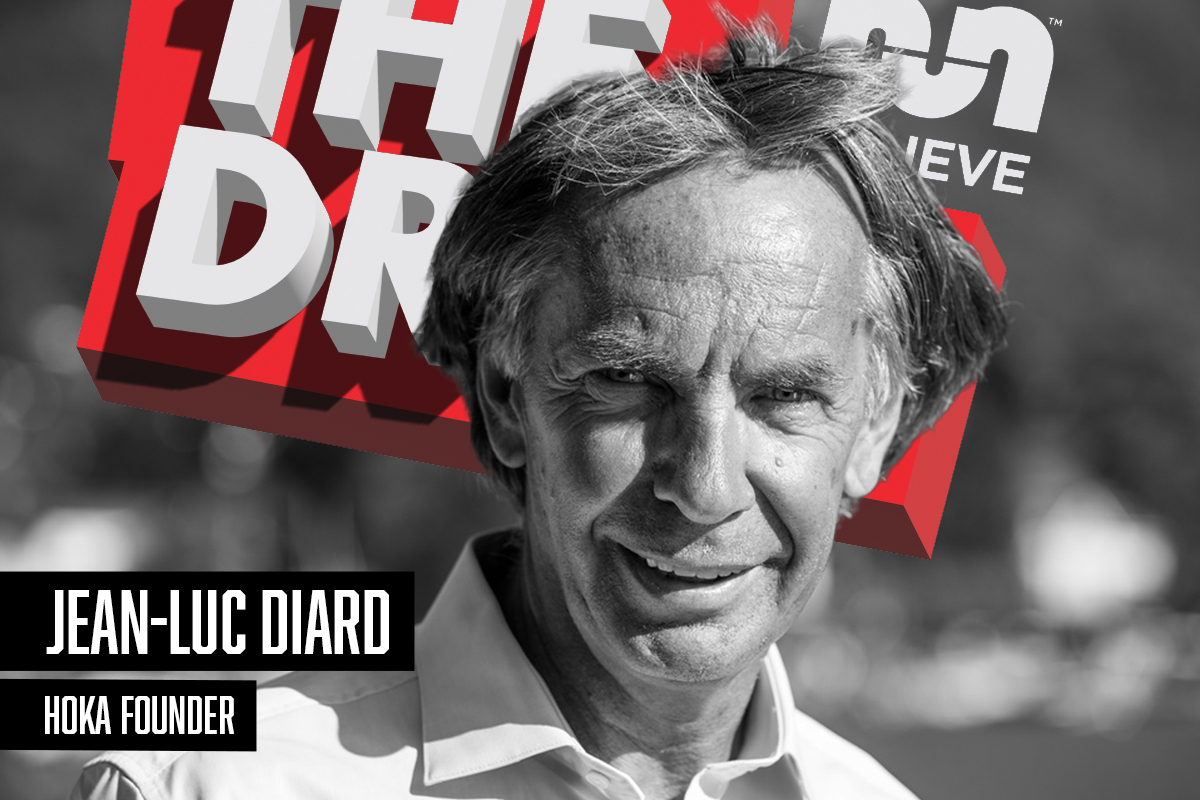
Jean-Luc Diard
Jean-Luc Diard co-founded HOKA in 2009 after decades at Salomon, where he developed the first shaped ski and served as CEO. As VP of Innovation at Deckers Outdoor Corporation, he revolutionized running with HOKA's oversized midsoles, now a $2.5 billion brand.
Nicolas Mermoud
Nicolas Mermoud is the co-founder of HOKA, the revolutionary running shoe brand. A French mountaineer and ultrarunner from the Alps, he brought his outdoor expertise to create footwear that changed the running world. Prior to HOKA, he served as VP International Marketing at Groupe Rossignol.