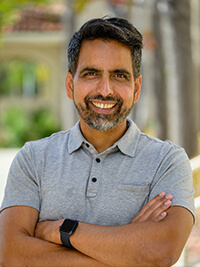
Khan Academy: Sal Khan. From Tutoring His Cousins to Teaching the World For Free (September 2020)
Sal Khan, founder of Khan Academy, recounts how tutoring his cousins in math over video calls sparked a global non-profit education platform. He explains why he rejected a for-profit model, leveraged early YouTube to reach learners worldwide, and built support from donors like Bill Gates, all while keeping every lesson free for anyone, anywhere.
Listen on Spotify
Episode Recap
Sal Khan began by creating short math videos for his young cousins, posting them to YouTube. What started as personal tutoring quickly attracted strangers, revealing an untapped demand for free, accessible education online. Sal realized that YouTube's algorithm could push clear, concise lessons to students struggling with math concepts across the world, turning a small family favor into a global movement. The early videos were simple screen recordings with voiceover, but their clarity and pace resonated with learners who felt left behind by traditional classrooms. Word spread through blogs and social media, and soon Khan Academy was getting thousands of views a day without any marketing budget.
From Cousin To Classroom
Sal Khan began by creating short math videos for his young cousins, posting them to YouTube. What started as personal tutoring quickly attracted strangers, revealing an untapped demand for free, accessible education online. Sal realized that YouTube's algorithm could push clear, concise lessons to students struggling with math concepts across the world, turning a small family favor into a global movement.
A Non-Profit Mission
When Sal left his hedge fund job in 2009 to focus on Khan Academy full-time, he explicitly turned down offers to build a for-profit version. His pledge to keep every lesson free—no ads, no subscriptions, no paywalls—set the platform apart. That stance meant rejecting investors who saw massive commercial potential, but it also meant preserving the trust of millions of learners who depended on the resource. Sal believed that education was a basic human right, and he structured Khan Academy as a 501(c)(3) nonprofit to protect that mission from market pressures. He later wrote about this philosophy in his book, The One World Schoolhouse.
Scaling Through YouTube And Donors
YouTube's early algorithm amplified Sal's tutorials far beyond his initial audience, and Bill Gates began using them to tutor his own children. That high-profile exposure opened doors to major donors who shared Sal's vision for universal access to education. With their support, Khan Academy grew from a one-person operation into a global nonprofit serving millions of monthly users across fifty languages, offering interactive exercises, videos, and articles in math, science, economics, and more. Today, the platform partners with schools, teachers, and school districts worldwide to supplement classroom learning.
Key Takeaways
- 1Start With Personal, Unmet Needs: Sal Khan first built Khan Academy tutorials to help his young cousins with math homework, a small personal project that scaled to serve 170 million monthly global users for free.
- 2Align Business Structure With Core Mission: Sal rejected multiple for-profit acquisition offers to keep Khan Academy a non-profit, ensuring no paywalls would block access to free, world-class education for anyone, anywhere.
- 3Spot Early Potential In Underused Platforms: Sal recognized YouTube's untapped potential for educational content years before it became a mainstream learning hub, using the platform to distribute tutorials at zero marginal cost.
- 4Prioritize Universal Accessibility In Product Design: Khan Academy now offers hundreds of free tutorials in 50 languages, removing language and cost barriers to deliver consistent, trusted learning resources to global audiences.