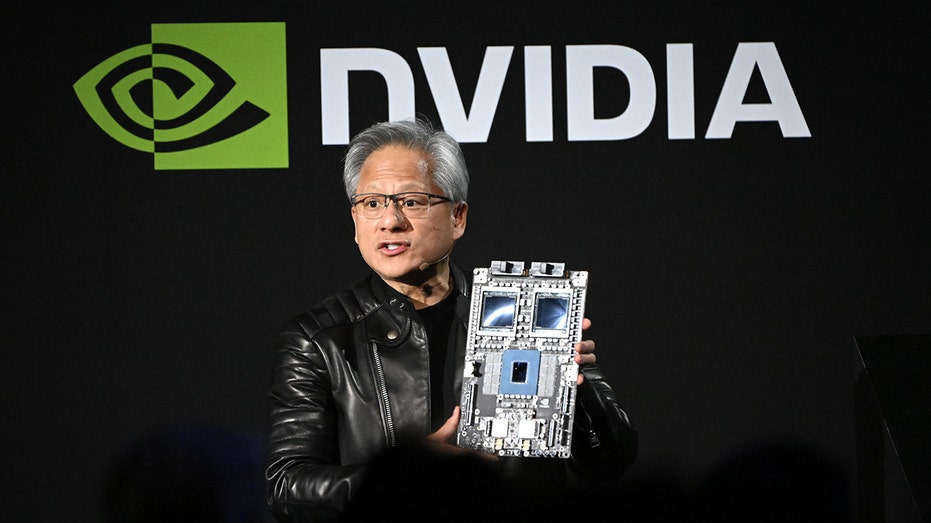
NVIDIA: Jensen Huang. From near collapse to becoming the world’s biggest company
Jensen Huang sits down to recount how NVIDIA went from selling 250,000 defective chips and laying off two-thirds of its staff to building the most dominant company in the world by market capitalization. Guy Raz unpacks the near-collapse, the $5 million bet with Sega, and Jensen's decade-long wager on CUDA when every investor was running for the exits. It's the story of what it actually costs to build something most people said couldn't be done.
Listen on Spotify
Episode Recap
Guy Raz sits down with Jensen Huang at NVIDIA headquarters to trace a company that went from factory floor disaster to the biggest on earth by market cap—boardroom betrayals, layoffs in an afternoon, and the bet that made NVIDIA the center of the AI revolution.
Born Into Instability, Raised By Grit
Jensen Huang was born in Taiwan in the early 1960s and spent part of his childhood in Thailand before political unrest pushed his family to send him ahead to the United States at nine years old. He landed at Oneida Baptist Institute in rural Kentucky—a boarding school with no stoplight in the surrounding town, where every student worked to cover costs. Jensen cleaned bathrooms. His roommate was sixteen. He didn't speak to his parents live for nearly two years because long-distance calls were too expensive; instead they traded cassette tapes. His first memory of America was McDonald's, where the swim team coach took the kids after meets. The food came in boxes. The lights felt like outer space.
From AMD to a Boardroom Gamble
He found electrical engineering at Oregon State, where a math and computer club introduced him to the four kids who shaped his early career—and to Lori, who became his wife. After graduation, Jensen and Lori moved to California in 1984. He went to AMD, she went to Silicon Graphics. He then landed at LSI Logic as the PC revolution accelerated. The CEO put him in front of Sun Microsystems and Silicon Graphics, where he met Chris Malachowsky and Curtis Priem—two engineers who wanted to build a graphics chip for gaming and got turned down. They left to start NVIDIA and asked Jensen to run it.
The NV1 Disaster and the Sega Ultimatum
NVIDIA's first product, the NV1, was built on the wrong algorithm. Thirty other companies had the right one. Microsoft was rolling out Windows 95 with DirectX, which did it correctly—NVIDIA was incompatible. The company had a contract with Sega guaranteeing $12 million for the NV2 and NV3. Two and a half years of work and the architecture was fundamentally flawed. Jensen flew to Japan and asked Sega's CEO to convert the remaining obligation into an investment. The CEO wasn't convinced. Jensen asked anyway. They converted $5 million into equity. He returned to California and laid off two-thirds of the company in a single afternoon.
CUDA: The Bet Nobody Believed In
By the 2000s, Jensen had set his sights on something far more ambitious than graphics chips. He poured billions into CUDA, a software layer that turned NVIDIA's GPUs into general-purpose supercomputers. For nearly a decade it made almost no business sense. The stock went sideways, sometimes down. Rumors swirled of a hostile takeover. Jensen withstood the pressure because he believed in the platform. A decade later, the bet paid off. AI researchers discovered that NVIDIA's GPUs, powered by CUDA, were exactly what machine learning needed. Overnight, the teenage gamer's graphics card became the engine of the AI revolution.
The Cost Nobody Talks About
When Guy Raz asks Jensen if he'd do it again, the answer is no—not because he regrets the outcome, but because he knows what the price was. Missing graduations. Seventy-hour weeks. The humiliation of 2007 earnings calls when the stock was in freefall and everyone blamed him. His wife Lori handled everything at home without complaint. Their two boys grew up without a fully present father. Both now work at NVIDIA. He's missed most of their milestones.
Key Takeaways
- 1Bet through the troughs when nobody's watching: Jensen Huang poured billions into CUDA for nearly a decade while the stock went sideways and investors bailed. Most founders fold when the numbers look bad. The ones who stick around through the quiet years end up owning the next wave.
- 2The first failure teaches the second bet: NVIDIA's NV1 chip bombed so badly the company returned 250,000 units and had to scrap everything. That disaster forced Jensen to rethink the entire architecture and gave him the clarity to cancel a $12 million Sega contract. Surviving your worst moment is often how you prepare for your best one.
- 3Your spouse's support is a competitive advantage: Jensen says he never heard Lori complain once during the years he was working seven-day weeks and missing graduations. She handled everything at home so he could handle everything at NVIDIA. That kind of support doesn't show up in financial statements, but it's one of the most underrated ingredients in building something enormous.
- 4Admit you wouldn't do it again: When asked if he'd build NVIDIA a second time, Jensen's answer is no—honest about the cost, unflinching about the trade-offs. That clarity isn't pessimism. It's what keeps a founder grounded enough to make the hard decisions that keep a company alive.