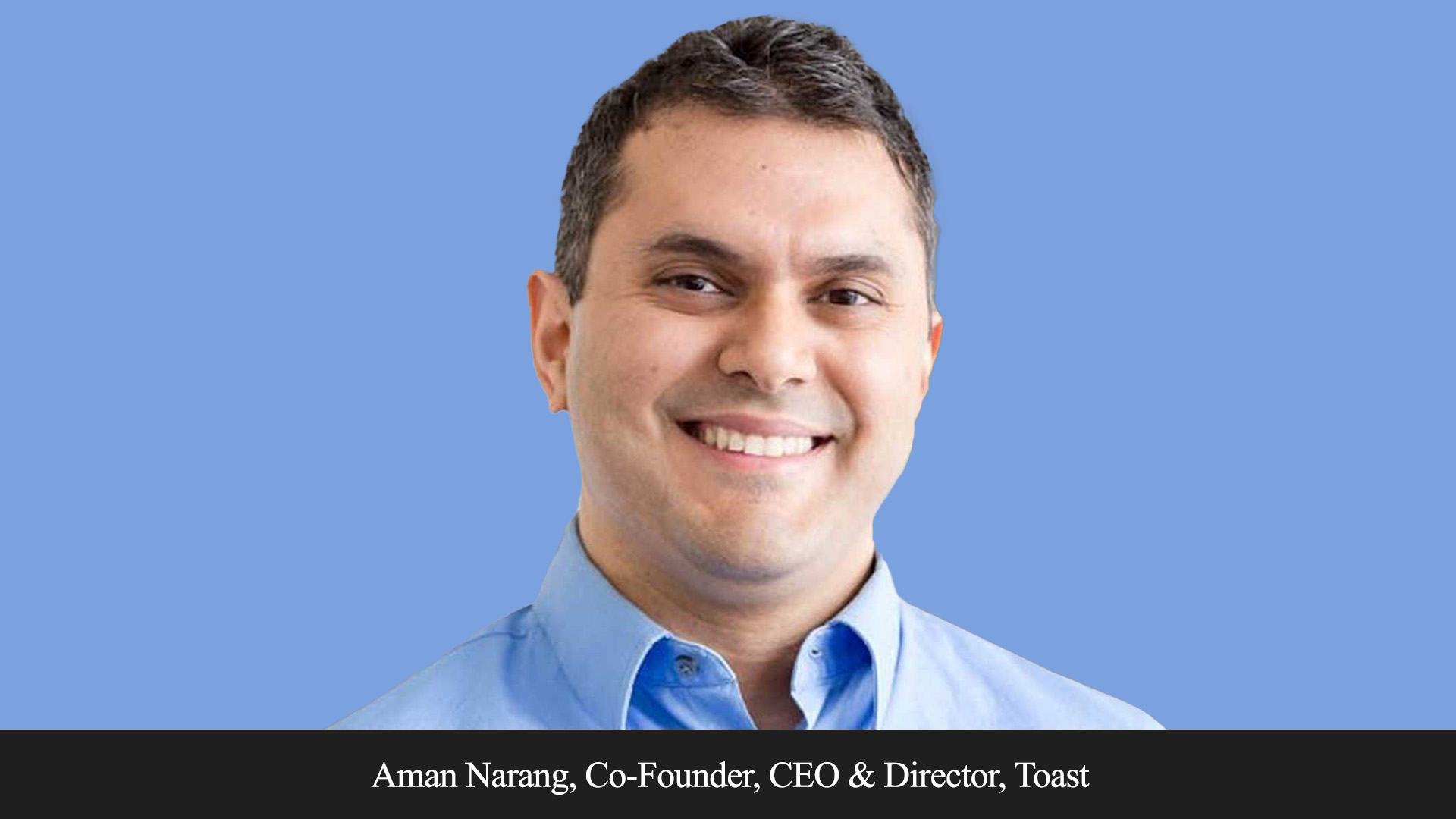
Toast: Aman Narang. How a Long Wait for the Dinner Check Launched a $2 Billion Business.
After waiting too long to pay his restaurant bill, Aman Narang thought there had to be a better way. His first idea - a mobile payment app - flopped, but that failure revealed a much bigger opportunity. Restaurants were trapped by outdated, expensive point-of-sale systems locked to on-premise servers. So Aman and his co-founders built Toast, a cloud-based operating system for restaurants from scratch. They worked from an unfinished basement, crashed their first launch, survived investor rejection and COVID, and grew Toast into a company that now powers more than 20 percent of U.S. restaurants.
Listen on Spotify
Episode Recap
Aman Narang and his co-founders almost quit their jobs at Endeca the day after Oracle acquired the company in 2011. But instead of jumping into another opportunity, they spent months exploring ideas, and one frustrating evening at a Boston bar gave them their first concept: an app that would let diners pay their checks from their phones. They built it, launched it at a local restaurant, and within minutes the system crashed. Customers had to write down credit card numbers on paper. The app never gained traction, and the team realized they had completely misunderstood the problem. The real pain point wasn't paying the bill—it was the entire restaurant technology stack.
From Payment App to Point-of-Sale Platform
The pivot changed everything. Aman and his co-founders discovered that restaurant owners hated their legacy systems—bulky, expensive, and locked to on-premise servers—but switching felt impossible. The team decided to build a cloud-based point-of-sale system purpose-built for restaurants, replacing Micros, NCR, and other entrenched providers. They raised a small seed round from their former boss, Steve Papa, and launched their first customer in July 2013. The debut was a disaster: the system went down within twenty minutes, forcing staff to write orders by hand. But the founders learned a critical lesson—restaurant technology is mission-critical and cannot fail.
Scaling Through Customer Obsession
Early growth was painfully slow. Aman pitched hundreds of restaurateurs before finding a handful willing to take a risk on an unknown startup. Rather than compete head-on with established players, Toast focused on being purpose-built for busy restaurants and offering a much lower upfront cost than legacy systems. A partnership with Gordon Food Service helped Toast expand beyond Boston to Miami and Chicago. By 2015, the company had a few hundred customers but was struggling operationally. Co-founder Steve Fredette brought in Chris Camperado as CEO to build the systems and culture needed to scale. Under Camperado, Toast shifted from a scrappy startup to a growth engine, expanding its platform to cover inventory, payroll, scheduling, online ordering, and loyalty programs.
The COVID pandemic tested Toast's resilience. In early 2020, the company went from 100 percent growth to a 90 percent revenue drop almost overnight as restaurants shut down. Toast cut 55 percent of its staff but used the crisis to accelerate product development, launching QR-code ordering and off-premise tools that restaurants desperately needed. The company emerged stronger, went public in 2021, and today supports more than 20 percent of U.S. restaurants. In 2024, Aman returned to the CEO role, steering Toast into new markets—Canada, the UK, Ireland, and Australia—while expanding beyond restaurants into grocery stores, convenience stores, and other local retail. The lesson from the basement in Boston is still the company's north star: obsess over customers, build for the long term, and never forget where you started.
Key Takeaways
- 1Solve a frustration you've lived: The best business ideas often come from personal pain points you can't stop thinking about.
- 2Pivot fast when the data says no: Toast's first product failed, but the founders listened to restaurant owners and rebuilt around the real problem.
- 3Customer obsession beats competitor obsession: Aman focused on what restaurateurs needed rather than worrying about rivals like Square or Clover.
- 4Resilience is a competitive advantage: Toast survived a 90 percent revenue drop during COVID by building tools restaurants actually needed to adapt.
- 5Choose co-founders who share your values: Aman credits his team's character and work ethic as the foundation that carried Toast through every crisis.