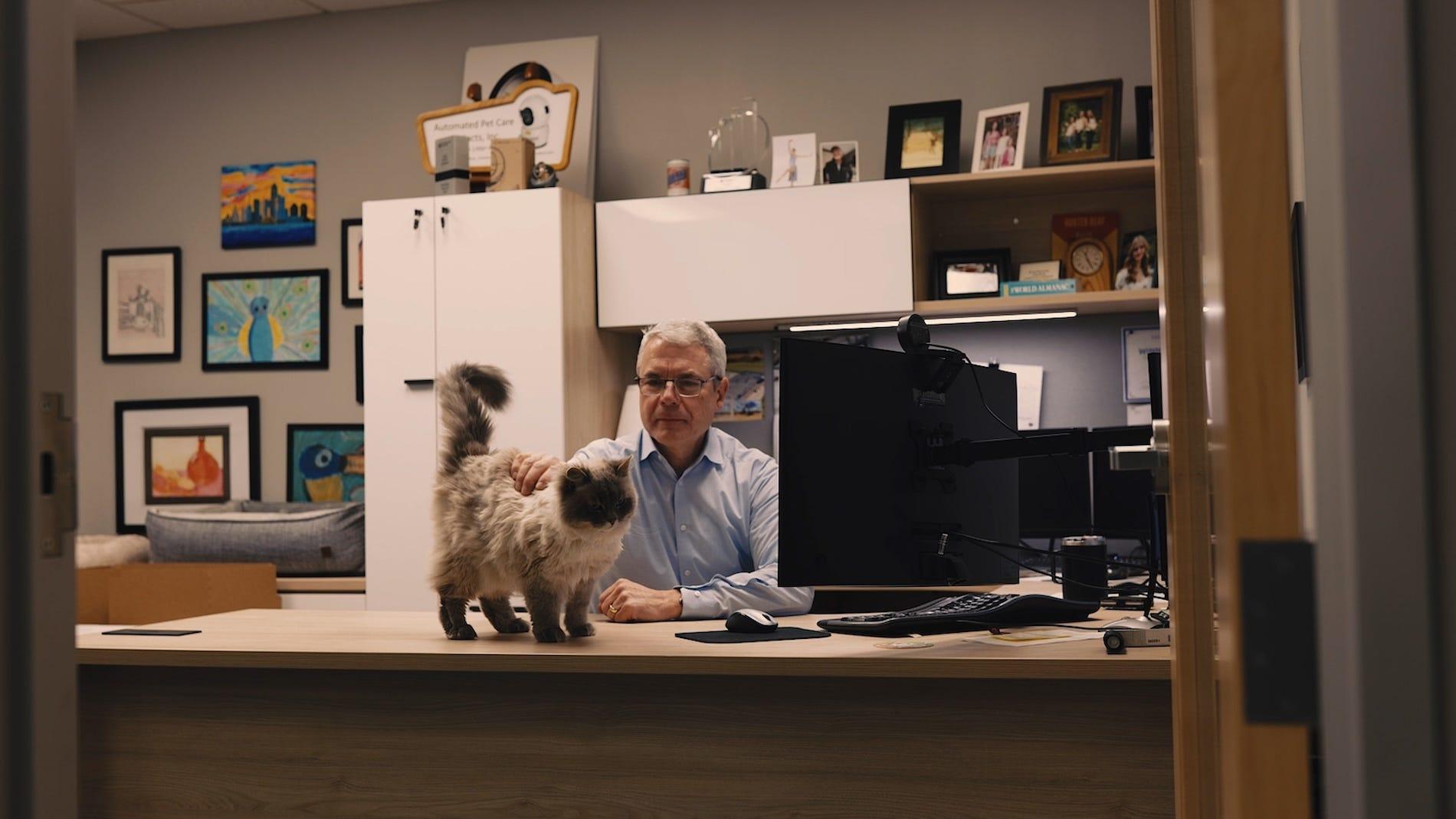
Whisker/Litter-Robot: Brad Baxter
Brad Baxter left Ford Motor Company in his mid-20s to pursue entrepreneurship, eventually turning a frustrating cat litter problem into Litter-Robot. After years of part-time selling and a nearly fatal cash crunch, Brad retooled his product, hired a marketing partner, and grew Whisker into a $300 million pet-tech brand. He shares the messy, hands-on details of building an automatic litter box that actually works.
Listen on Spotify
Episode Recap
Brad Baxter grew up in rural Wisconsin dreaming of designing cars, but he quit Ford Motor Company after just three years because he realized he didn't want to spend his career climbing the corporate ladder. He started a profitable consulting business helping European auto parts suppliers, yet he always wanted to be a product entrepreneur. That ambition led him to cats — specifically, the terrible experience of cleaning a dirty litter box every night.
From Ford Engineer to Cat Litter Entrepreneur
Baxter's first attempt at an automatic litter box was a commercial failure, so he designed a gravity-driven sifting drum and licensed a similar patent from an inventor named Don Writes. He built prototypes in his garage using vacuum-forming and a small loan from his dad, then launched Litter-Robot with no marketing budget. For nearly two decades he sold the product part-time while running his consulting business, because the venture was hemorrhaging cash. His wife Margaret tolerated the drain for five years before asking the question that forced his hand: what's the endgame here?
The Cash Crisis That Saved the Company
By 2004, Baxter had dumped $300,000 to $350,000 into Litter-Robot and was taking a minimal salary to keep it alive. Vacuum-formed plastic units were so expensive to produce that the company was essentially subsidizing buyers. Baxter retooled the entire product for injection molding using a 12 percent loan from a supplier, betting the business on a 12-to-18-month sprint. The gamble worked. In 2004 the company hit $1 million in sales; by 2005 it was $1.5 million and finally profitable.
Scaling Through Direct-to-Consumer Growth
For years Baxter rejected retail distribution because margins couldn't support the 50-point discounts stores demanded. Instead he built a direct-to-consumer machine that eventually delivered 80 percent of sales online. Growth was steady — 25 to 30 percent annually — until 2015, when he hired Jacob Zupke as a marketing partner. Their "25 Days of Christmas" influencer campaign on YouTube and Instagram exploded monthly site traffic from 30,000 to 300,000 visitors. Sales doubled from 2015 to 2016 and kept climbing.
Building a Pet-Tech Empire
Between 2015 and 2021, Whisker grew from $7.5 million to over $150 million in revenue and expanded from 25 to more than 300 employees. Baxter deliberately kept manufacturing in the United States after calculating that shipping costs from overseas roughly equaled the savings of offshore assembly. In 2019 he sold a minority stake to Pondera Holdings for $31 million, cashing out his father's 35 percent share and taking a few chips off the table himself. By 2022, with one million Litter-Robot units sold and Litter-Robot 4 on the market, Baxter stepped down as CEO and handed the reins to Zupke, staying active in product development while serving a one-year term as mayor of Bloomfield Hills, Michigan.
Key Takeaways
- 1Brad Baxter's long grind: He spent years selling Litter-Robot part-time while running a consulting business before the product could support him full-time.
- 2The $31 million bet: A growth equity investment in 2019 funded Whisker's expansion, but Baxter bootstrapped the company for its first 19 years without outside capital.
- 3Manufacturing in America: The decision to keep production in the United States — even when cheaper offshore options existed — preserved quality control and supply chain agility.
- 4Digital-first growth: Whisker grew from $7.5 million to over $150 million in revenue between 2015 and 2021 by embracing digital marketing and direct-to-consumer sales.