Advice Line with John Zimmer of Lyft
Lyft co-founder John Zimmer returns to The Advice Line to guide three founders through scaling challenges. From a UK showerhead innovator expanding to America to a weighted vest bootstrapper financing inventory, and a craft chocolate maker balancing purpose with personal sustainability, Zimmer shares lessons from building a rideshare giant. His advice centers on testing assumptions before scaling, creative financing over waiting for capital, and protecting your health to serve your mission. The episode offers a masterclass in founder resilience from someone who's lived the startup journey.
Listen on Spotify
Episode Recap
Intro
Guy Raz welcomes Lyft co-founder John Zimmer to The Advice Line, where three founders seek guidance on scaling challenges. Fresh from leaving Lyft after twelve years to launch Yes And, a platform for mission-driven businesses, Zimmer shares hard-won lessons from building a rideshare giant.
Caller 1: Alan Somerfield & ShowerSpaah
Alan calls from Nottingham with a showerhead that mixes soap and water on demand, initially designed for mobility but now attracting luxury and pet owners. After selling 2,500 units and earning $200,000 in the UK, he's eyeing U.S. expansion but unsure how to balance fulfillment, market positioning, and capital. Zimmer asks about unit economics across segments—mobility versus luxury versus pet use—and recommends running quick experiments with Google Ads or Amazon to test acquisition costs before investing in U.S. warehousing. "You don't need to set up warehousing yourself," Zimmer says, pointing to third-party logistics and Shopify fulfillment as low-cost options. He encourages Alan to focus on the mobility story, observing that Peloton and Warby Parker succeeded by dominating a niche first. With 500,000 care home beds in the UK alone, the mobility opportunity remains huge. Zimmer suggests using Shopify's debt terms as a benchmark when seeking other lenders.
Caller 2: Teri Levy & RUKSTR
Teri from Los Angeles has built RUKSTR into a $400,000 bootstrapped brand selling weighted vests and backpacks for women—but she's constantly selling out due to inventory constraints. Manufacturing in China and Pakistan, she faces tariff uncertainty and difficulty securing inventory financing. Zimmer congratulates her on the "phenomenal problem" of demand outstripping supply. His first suggestion: pre-orders, framed as community backing rather than a cash grab. "Tell your customers, 'We can't keep up—pre-order and get 5% off,'" he advises. He also mentions Shopify's financing program and a friend's credit fund specializing in DTC inventory needs. On tariffs, Zimmer suggests exploring Mexico for backpacks but acknowledges raw material limitations for vests. His core message: working capital exists if you articulate the momentum compellingly.
Caller 3: Kobe Goodwin & Slow Coco
Kobe runs Slow Coco, a Bronx-based craft chocolate maker with three full-time employees and growing farmer's market presence. Despite coaches, therapy, and clear strategies, he struggles to step away from work, worried that turning off means letting his team and purpose down. Zimmer and Raz both relate—Zimmer shares how Logan Green made workouts non-negotiable, while Raz describes bricking his phone overnight. "If you really care about those people, take care of yourself first," Zimmer insists. They discuss employee ownership: Kobe already shares quarterly profits but wonders about ESOPs. Zimmer cites New Belgium and Bob's Red Mill as purpose-driven companies that baked in ownership early. "Bigger is better when your purpose is strong," he says, "but you must design that stakeholder structure now, not later."
Final Thought
Zimmer's guidance cuts to the fundamentals: validate economics before scaling, finance creatively rather than waiting for perfect capital, and build personal and structural sustainability into your business from day one. His journey from Lyft's battles to Yes And proves that founder resilience comes from systems, not just passion.
Key Takeaways
- 1Test use cases before scaling: Run quick experiments with Google Ads or Amazon to understand acquisition costs across different customer segments before investing in warehousing or major expansion. Data beats assumptions.
- 2Finance creatively, not conventionally: Use pre-orders, third-party logistics, and revenue-based financing to bridge inventory gaps instead of waiting for perfect capital. Constraints force innovation.
- 3Your health fuels your impact: Sustainable entrepreneurship requires non-negotiable self-care: sleep, exercise, and boundaries. You cannot serve your team, customers, or mission from a depleted state.
- 4Build ownership structures early: If purpose drives you, embed stakeholder ownership (ESOPs, profit sharing) from the start rather than as an afterthought. Scale amplifies your structure, so design it intentionally.
- 5Focus creates leverage: Dominate a niche before expanding. Peloton began with serious cyclists, not casual fitness. Mastering one category builds credibility and category authority that fuels broader growth later.
Founders Featured
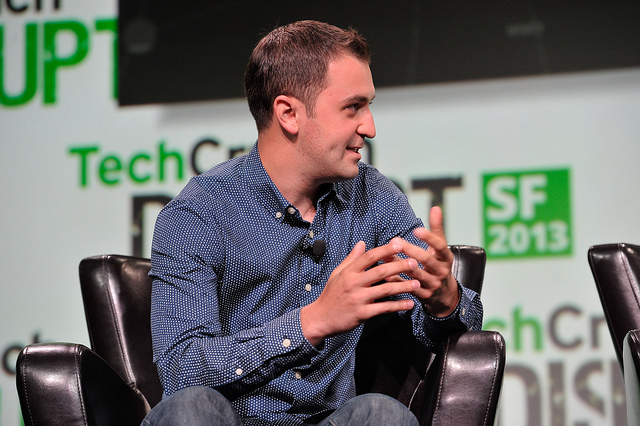
John Zimmer
John Zimmer is the co-founder and former president of Lyft, the on-demand transportation company he launched with Logan Green in 2012. A Cornell University graduate, Zimmer stepped down as president in June 2023 to become vice-chair of the board, continuing to shape urban mobility.
Alan Somerfield
Alan Somerfield founded ShowerSpaah, a UK company that invented a shower system mixing soap and water on demand. He created it to help his mum with mobility challenges. With 35 years of product design experience, including the Stoplock steering wheel lock, Somerfield solves real problems.
Teri Levy
Terry Levy founded Ruckstar, a weighted vest and backpack company for women ruckers. Based in Los Angeles, Levy launched the business after discovering rucking and spotting a market gap for women-specific designs. Ruckstar bootstrapped to 400K revenue in its first year.
Kobe Goodwin
Kobe Goodwin co-founded Slow Coco, a craft chocolate company making single-origin, minimal-ingredient bars with ethical sourcing. He started the business with his sister Tovia from the Bronx, NYC.
Related Companies

Lyft
Lyft, Inc. is an American transportation company offering ride-hailing services, motorized scooters, and bicycle-sharing across the United States and Canada. Founded in 2012, Lyft connects riders and drivers via its app, serving 25 million active riders and coordinating millions of rides per week.
1 episode

ShowerSpaah
ShowerSpaah is a shower aid for elderly and disabled users, designed to mix liquid soap or body wash directly into the water flow.
1 episode
RUKSTR
RUKSTR makes weighted vests and rucking gear for women. Founded by Teri Levy in Los Angeles, the company designs ergonomic backpacks and vests that fit women's bodies, helping them build strength through weighted walking. RUKSTR aims to make rucking accessible to all women.
1 episode

slowcocoa
Slow Coco is a craft chocolate maker based in the Bronx, New York. They handcraft chocolate from bean to compost, creating bars and drinking chocolate that invites connection over distraction.
1 episode