Scrub Daddy: Aaron Krause. How a Failed Experiment Became a Billion-Dollar Sponge
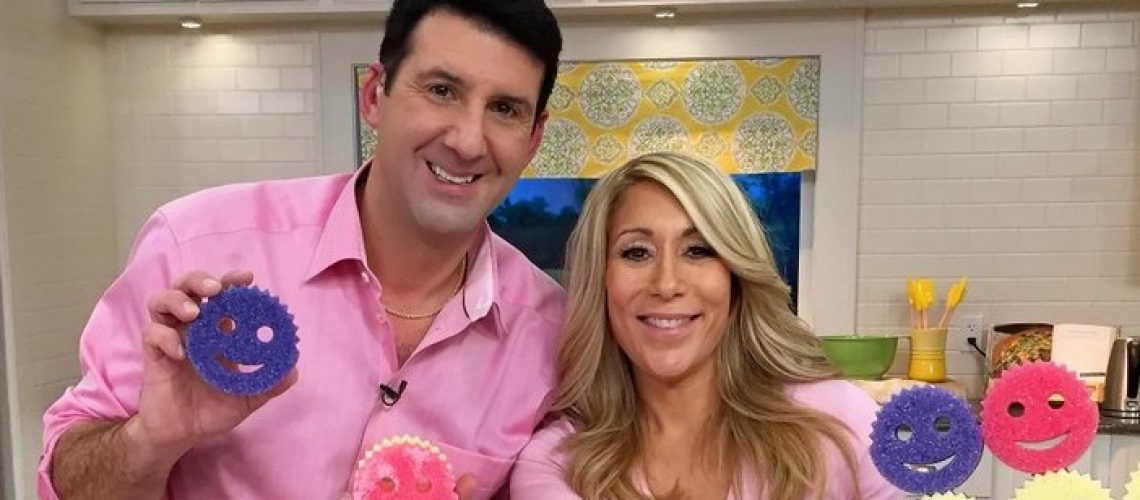
Aaron Krause turned a shelved car-detailing sponge into Scrub Daddy, Shark Tank's most successful product ever. After 3M acquired his buffing pad company but left a box of unused foam sponges behind, Krause accidentally discovered their temperature-changing texture while cleaning his house. The smiley-face scrubber launched in 2012, earned Lori Greiner's $200,000 investment, and built a $926 million retail empire. From QVC blowouts to 257,000 retail locations, Scrub Daddy proves that the right market fit can resurrect even the most forgotten invention.
Listen on Spotify
Episode Recap
Aaron Krause's breakthrough wasn't discovering a new material—it was recognizing that his failed 2007 hand scrubber was solving the wrong problem. The same temperature-sensitive foam that mechanics ignored became a kitchen revolution when repositioned for dishwashing. The sponge sat labeled "scrap" for years until a simple lawn furniture cleaning session revealed its dual-texture magic.
Revive Shelved Ideas with Market Pivots
The lesson here is clear: product failure often signals a market mismatch, not a design flaw. Regularly re-examine rejected prototypes with fresh customer segments; what's useless for one group may be indispensable for another.
Live Demonstrations Eliminate Skepticism Instantly
Before Shark Tank, before QVC, Scrub Daddy's first real sales happened in a ShopRite aisle, where Aaron converted 100% of onlookers into buyers by letting them experience the texture change. No marketing copy could match the impact of a customer watching grime vanish in real time. That visceral proof scaled through home shopping networks and television, where energetic demos turned viewers into overnight customers. When prospects can't touch a product, skepticism wins; when they can, hesitation evaporates. Build demonstration into your go-to-market from day one.
Build a Brand Ecosystem, Not a One-Hit Wonder
Sharks questioned Scrub Daddy's longevity, fearing it was a novelty sponge. Aaron already knew better—he had Scrub Mommy in development, a double-sided variant that now outsells the original. Today, the brand spans dozens of SKUs, from holders to specialized brushes, creating a "brand block" that dominates shelf space and withstands competition. A hero product opens doors; a family of products fortifies them. Start expanding horizontally within your category before competitors emerge, and your valuation will reflect ecosystem strength, not single-product risk.
Lock Down Critical Inputs Before Scaling
Scrub Daddy's German-made foam material is exclusive; no other factory produces its exact texture. Aaron secured that supply early, making knockoffs inherently inferior. Meanwhile, cheap Chinese copies flood Amazon but can't replicate the smiley-face patent or the precise polymer science. In an era of global sourcing, your defensibility hinges on controlling unique inputs—whether proprietary materials, specialized equipment, or exclusive partnerships. Document what makes your product irreplaceable and defend those advantages legally and contractually before you scale.
Partner with Believers, Not Just Checkbooks
Lori Greiner succeeded where Mark Cuban hesitated because she'd presented products on QVC; she understood demonstration, retail psychology, and the nuance of Aaron's pitch. Her investment brought not just capital but credibility and access. This highlights a timeless principle: choose investors and partners who genuinely grasp your vision, not just your valuation. A believer champions you in rooms you can't enter, introduces you to their network, and provides strategic guidance that money alone can't buy.
Key Takeaways
- 1Pivot failed products with fresh perspective: That rejected prototype might be solving the wrong problem; re-evaluate shelved ideas for new customer segments and use cases—the solution is often right, the market was wrong.
- 2Live demos eliminate skepticism instantly: When selling an unfamiliar product, nothing beats real-time demonstration; Aaron converted 100% of ShopRite observers into buyers by letting them experience the magic themselves.
- 3Lock down critical inputs before scaling: Scrub Daddy's German foam material can't be copied; secure exclusivity agreements on your essential components early, or you'll build a brand competitors can easily replicate.
- 4Build a brand block, not a one-hit wonder: Start with a hero product but expand into a family of SKUs before competitors arise; Scrub Mommy now outsells Scrub Daddy, proving ecosystem strength.
- 5Partner with believers, not just checkbooks: Lori Greiner succeeded where Mark Cuban hesitated because she understood QVC and product demos; choose investors who genuinely get your vision, not just your valuation.