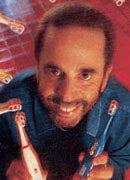
Spinbrush: John Osher. The Electric Toothbrush That Sold for $475M
John Osher turned a $20,000 garage prototype into Spinbrush, the $5 electric toothbrush that became America's best-seller and generated a $475 million exit. Guy Raz sits down with Osher to explore how in-store demos, relentless iteration, and a landmark deal with Procter & Gamble built a consumer empire—and why the success came with deep personal regret about what was lost along the way.
Listen on Spotify
Episode Recap
Guy Raz sits down with John Osher to unpack how a $20,000 garage prototype became a $475 million exit, and why the win felt like a loss.
The Prototype That Started It All
John Osher wasn't trying to build an empire. He just wanted his kids to brush their teeth. His solution, a spinning toothbrush with built-in timer and toothpaste, started as a weekend project in Connecticut. The main insight wasn't technical; it was behavioral. Kids hated brushing, but they loved anything that felt like a toy. The $20,000 prototype worked because it made brushing fun.
Growth Through Demonstration
Before influencer marketing, before viral videos, Spinbrush grew through old-fashioned demonstration. John would stand in supermarket aisles at Walmart, Kmart, and Target, handing out samples. The product sold itself. The vibration, the sound, the simple joy of watching it work—these weren't things you could convey in an ad. Within months, Spinbrush was outselling every other toothbrush on the shelf. Distribution followed naturally.
The Kellogg's Deal That Went Wrong
When offers poured in, John turned down $20 million, then $50 million, then $100 million. He wanted a partner who understood consumer goods, who could scale globally, who would respect what he'd built. Kellogg's seemed perfect: a $13 billion food giant with unmatched distribution. The $475 million deal included earn-outs and milestones. But problems emerged fast. Kellogg's wanted to move manufacturing to China. They wanted to rebrand as "Kellogg's Oral Care." Then John discovered they were licensing the technology to competitors while still paying him royalties. The brand was being diluted. The partnership turned sour. John sued for $300 million in 2008, settling in 2010. He never launched another product.
The Spinbrush story is a masterclass in product-market fit and viral sampling, and a brutal lesson about deal structure and founder control.
Key Takeaways
- 1Product-market fit beats marketing budget: Spinbrush grew through in-store demos, not ads. A product that sells itself is the ultimate competitive advantage.
- 2Ownership matters more than exit size: John's deal netted $100M+ but destroyed his control. Founder-friendly terms can be worth more than headline valuations.
- 3Partnerships require alignment, not just assets: Kellogg's had distribution; John had the product. Misaligned values on quality and brand destroyed the relationship.
- 4Build experiences, not just features: The Spinbrush wasn't a toothbrush; it was a sensation. Tactile, memorable experiences drive word-of-mouth no media budget can replicate.
- 5Deal architecture is as important as price: Earn-outs and performance milestones can become traps. structure matters as much as the headline number.