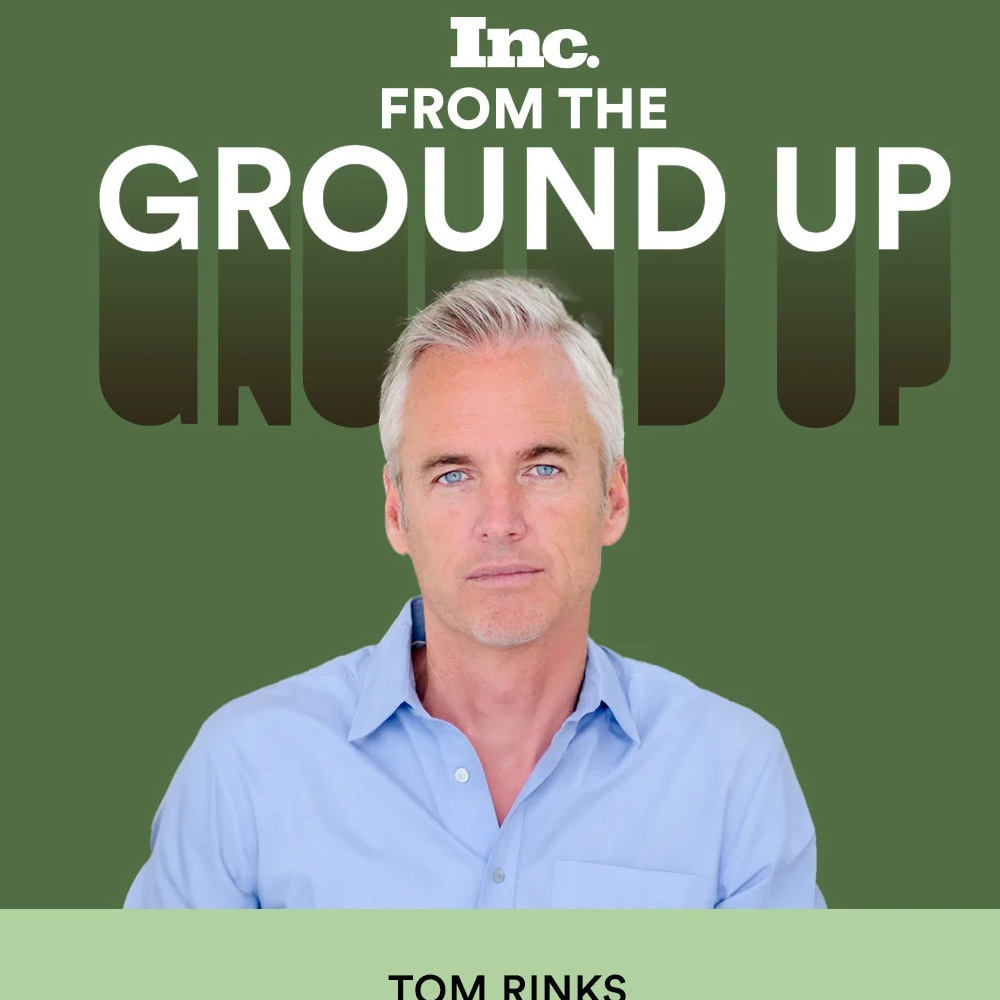
Sun Bum: Tom Rinks. The Secrets of a Master Brand Builder (2023)
Tom Rinks turned a failed sunscreen concept into a $400 million empire by treating packaging like personality and distribution like performance art. From a fake Cocoa Beach headquarters to an iconic yellow gorilla logo, he engineered desire before most customers ever touched the product. He explains how the "Elvis Principle" of juxtaposed brand traits, a "Trojan Horse" retail strategy, and knowing when to hand off the CEO keys made Sun Bum an acquisition target for SC Johnson.
Listen on Spotify
Episode Recap
Tom Rinks transformed a discarded sunscreen concept into a $400 million brand by treating packaging as personality and retail displays as theater. His story includes a fake Cocoa Beach headquarters, an iconic yellow gorilla logo, and a five-year legal war with Taco Bell that taught him to build brands that could outlast any founder's reputation.
From Furniture Sales to Brand Architecture
Tom Rinks learned to sell the hard way. In his twenties, he worked commission-only at Art Van Furniture in Grand Rapids, Michigan, where the pressure was relentless. Those years taught him how to read a customer and speak directly to what they wanted to feel. He learned to match salespeople to buyers, to engineer urgency with fake overhead announcements, and to treat every interaction as a psychology experiment. That instinct would later turn a single cartoon T-shirt into a licensing business, a failed sunscreen line into a global brand, and a Chihuahua into an advertising legend.
The Elvis Principle and the Birth of Sonny
By the mid-1990s, Rinks had moved from furniture to t-shirts, licensing, and brand design. He created the "Slam Dance" Michigan basketball shirt, sold ten thousand units in a single season, and built a catalog of four hundred licenses. He also designed the Taco Bell Chihuahua campaign, only to spend the next five years suing the company for unpaid credit. When he and partner Renee Canetti were hired in 2009 to rescue three flailing sunscreen brands, Rinks saw something no one else did: a market dominated by legacy names with clinical packaging and zero personality. He dumped the existing concepts and started from scratch, borrowing cues from 1960s surf culture, mid-century modern furniture, Northern European typography, and Japanese streetwear. The result was a wood-grain bottle, a yellow gorilla in sunglasses, and a tagline—"Trust the Bum"—that made sunscreen feel like a lifestyle choice. He called it the Elvis Principle: the power of mixing edge with warmth, danger with comfort, in a single brand identity.
Faking It Until You Make It
Sun Bum never launched from Cocoa Beach, Florida. The first headquarters was above the owner's old offices in Grand Rapids, with customer service calls forwarded from a P.O. box. Rinks and his team told clients the weather was "unbelievable" when it was actually snowing, and referred inquiries to the "Great Lakes office." The fiction made the brand feel like an authentic beach lifestyle company, not a Midwestern startup. Distribution was equally theatrical. Rinks and his first sales rep, Michael Acera, refused to let retailers cherry-pick products. Instead, they built elaborate displays and forced buyers to purchase the entire setup. It was a Trojan Horse strategy: the display made Sun Bum look like an established brand overnight, even though year one revenue was just one hundred thousand dollars. By year two, that number had grown to 1.1 million.
When to Stop Being the CEO
Rinks knew his strengths were creative, not operational. By year three, he was already thinking about succession. He found his CEO in Adam Francis, an ex-pro surfer with a Harvard degree who understood scaling. Rinks got out of the way. The move proved prescient. Sun Bum hit seventy million in annual sales, but regulatory walls blocked international growth because sunscreen is classified as a drug in most markets. Rinks needed a partner with boots on the ground, manufacturing facilities, and regulatory expertise. SC Johnson acquired Sun Bum in 2019 for $400 million. Rinks didn't need to be the face of the brand. He had already won by building something that could outlive his own visibility—a gorilla that didn't need a founder to sell sunscreen.
Key Takeaways
- 1Design is the first product feature: Packaging and branding decisions made before a single unit ships can determine whether a product gets noticed or ignored on crowded shelves.
- 2Make the display bigger than the brand: Forcing retailers to commit to full shelf displays creates the illusion of scale and prevents products from disappearing next to legacy competitors.
- 3Know your creative limits: The best founders know when their skills lie in building the brand, not managing the business, and bring in operators before the growth curve peaks.
- 4Juxtaposition creates memorability: The 'Elvis Principle' combines unexpected traits like edge and warmth, danger and comfort, to build brand personalities that stick in consumers' minds.