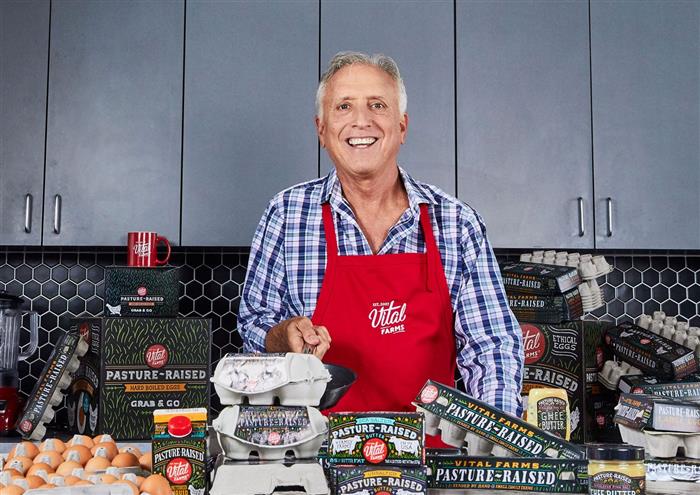
Vital Farms: Matt O’Hayer. How a serial entrepreneur re-branded the egg
Matt O'Hayer turned 20 hens on a Texas scrub patch into Vital Farms, a nearly $1 billion pasture-raised egg empire. After a chance encounter with deeply orange yolks sparked his obsession, he built a business that treats farmers as partners and eggs as a story. The episode explores how he scaled conscious capitalism, pioneered radical transparency through traceability, and proved that even commodities can command premium when you educate the market first. His lesson: re-branding something as humble as an egg requires relentless education and unwavering standards.
Listen on Spotify
Episode Recap
Guy Raz sits down with Matt O'Hayer to unpack how a charter boat captain turned 20 hens into a $1 billion egg brand—and in the process, changed how America thinks about its most basic protein.
From Serendipity to Obsession
It started with an egg. Not a business plan, not a market study—just an unforgettable yolk. In 2004, Matt O'Hayer tasted pasture-raised eggs so orange they looked like sunset. That moment shattered his assumption that all eggs were alike. Within months, he'd bought a run-down Texas farm, obtained 20 hens from Craigslist, and started selling to local restaurants. The early rejections were brutal: chefs wouldn't pay $4 a dozen when Cisco offered 89 cents. But Matt persisted, using the eggs themselves as salespeople—cooking them right there on the spot to prove the difference. He discovered that when you let customers experience quality, skepticism melts.
The Franchise Farm Model That Scaled
Traditional egg farming is centralized and industrial. Matt flipped it: Vital Farms wouldn't own most of the farms; it would partner with independent farmers who raised hens according to strict pasture standards. This "conscious capitalism" model meant farmers became stakeholders in the brand's success, not just suppliers. Matt provided certification, processing facilities, distribution, and—critically—a shared purpose. The result? Quality stayed high because each farm's reputation was on the line. Farmers stayed motivated because they shared in the value they helped create. When you scale through partnership rather than ownership, culture spreads organically.
Educating Before Selling
Eggs were the ultimate commodity. No one cared about brands. Matt's biggest hurdle wasn't production—it was ignorance. Most consumers didn't know pasture-raised existed, let alone why it mattered (omega-3s, animal welfare, flavor). So Vital Farms became an education company first. They created full traceability: scan a carton, see the exact farm that laid your eggs. They invited journalists on farm tours. They explained the difference in taste and ethics, not just features. Matt learned that category creation requires teaching, not just pitching. Pay for education today, and you own the market tomorrow.
Conscious Capitalism Under Pressure
As Vital Farms approached $1 billion, questions intensified: could values survive scale? Would investor demands force compromises on animal welfare or farmer margins? Matt's answer: embed standards in contracts and refuse to budge. The company's animal welfare protocol is non-negotiable; farms that don't comply are audited and corrected or removed. Scaling doesn't mean diluting—it means building guardrails that protect your mission at speed. The episode reveals that conscious capitalism isn't a soft philosophy; it's a hard-nosed strategy that acknowledges the long-term is built on short-term integrity.
The Vital Farms story remains a masterclass in re-branding the un-brandable—proving that with purpose, transparency, and partnership, even eggs can inspire loyalty, command premium prices, and change an entire industry's trajectory.
Key Takeaways
- 1Turn commodities into stories: Matt didn't sell eggs; he sold orange yolks, sunny pastures, and traceable farms. Find the narrative every commoditized product hides and make it central.
- 2Scale through partnership, not ownership: The franchise farmer model let Vital Farms grow fast without losing soul. Empower independent operators with shared purpose - they will defend quality better than you could.
- 3Educate first, sell second: No one knew pasture-raised eggs existed. Vital Farms spent years teaching before scaling. The market you create through education becomes your defensible moat.
- 4Embed non-negotiables in contracts: Animal welfare standards aren't aspirational - they are contractual. Protect your mission at scale by writing values into binding agreements before pressure mounts.
- 5Use transparency as your competitive advantage: Traceability turned a food safety risk into trust. Let customers see your supply chain; obscurity is the enemy, transparency the differentiator.