Magnolia: Chip & Joanna Gaines. From House Flipping to Household Name
Chip and Joanna Gaines transformed Waco from "Wacky Waco" to a design destination through the power of authentic storytelling and relentless grit. What began as a struggling house-flipping venture and a tiny home goods store evolved into a media empire spanning television, retail, and consumer products. Their journey reveals how staying rooted in community while daring to dream big can redefine both a city and an entire industry.
Listen on Spotify
Episode Recap
Chip Gaines never planned to become a reality TV star. He was just a kid from Waco who loved baseball, got cut from college, and started flipping houses to make ends meet. Joanna Stevens, a broadcast journalism major with boutique dreams, seemed destined for a different path. Yet their meeting at her family's Firestone tire shop sparked a partnership that would change their lives and reshape an entire city's identity.
From House Flipping to Home Store
Early days were gritty. Chip learned construction through trial and error, hiring locals and figuring things out as he went. Joanna ran a small shop selling curated home goods, fueled by a vision from a lonely internship in New York City, where boutique windows offered escape from harsh newsrooms. When they married in 2003, Joanna poured her heart into that store while Chip expanded renovations. Her father's skepticism—"You don't do design. You've never had a store"—echoed common doubt. Still, she persisted, learning through failure: a $25 wicker sled sat unsold for weeks, nearly making her quit until her father secretly sold it, signaling her to keep going.
The Crisis That Forged Them
By 2008, they were overextended. An ambitious 38-home development collapsed under the housing crisis. With four young children and a business hemorrhaging cash, they faced virtual bankruptcy. "Every day was like, do we file?" recalls Chip. What saved them wasn't a bailout—it was their relational approach. They paid contractors in installments, sold items from staged homes, and Chip liquidated personal belongings. Their trust became their anchor. "It was like this one plus one started equaling 10," Chip says. They aligned against the problem instead of each other.
Fixer Upper and Unlikely Stardom
The turnaround came unexpectedly. A production company noticed Joanna's blog and asked to film a pilot. Both were skeptical—Chip thought it was a scam. But the footage led to an HGTV season. Suddenly, their renovation business boomed. What shocked them most wasn't TV exposure but the frenzied fan response at a San Antonio home show. "Thousands were there for us," Chip recalls. The show's raw authenticity—real clients, real kids, real marriage—resonated. Farmhouse style exploded, with shiplap, barn doors, and apron sinks becoming mainstream. But fame brought tensions: production wanted faster episodes while Chip and Jo prioritized client quality. Their focus stayed on business, not celebrity.
Magnolia: Building Beyond the Show
As the brand grew, they declined private equity, reinvesting profits. In 2016, they launched Magnolia Market at The Silos, a former cottonseed oil refinery that became a pilgrimage site. Then came their toughest decision: ending Fixer Upper in 2018, despite 19 million weekly viewers. "Everyone said if you leave, you'll be forgotten," Joanna recalls. But they trusted a prior lesson—when Joanna closed her store in 2007, she felt God say it would return bigger. They took a year off, then partnered with Discovery's David Zasloff to launch Magnolia Network, owning their on-screen persona for the first time.
Today, Magnolia spans a TV network, magazine, books, Target collaborations, and a food line. The Silos draws global tourists, effectively rebranding Waco from a city known for a 1993 tragedy to a beacon of Southern hospitality. Through it all, Chip and Jo attribute success to faith, family, and an unshakeable work ethic. "We're grinders," Chip says. "Gains were built for hard things." Their story isn't about a perfect plan—it's about two people who chose each other, chose community, and chose to keep showing up, even when odds were stacked against them.
Key Takeaways
- 1Partner with someone who complements your weaknesses: Chip's visionary risk-taking balanced Joanna's cautious design intuition, creating a partnership where 1+1 equalled 10.
- 2Use scarcity as creative fuel: Their most innovative solutions, such as home shows selling $30K in product and selling personal items to pay bills, emerged when resources were scarcest.
- 3Build an authentic brand that cannot be replicated: Fixer Upper succeeded because it showed real families, real renovations, and a real marriage, elements that felt genuine in an artificial genre.
- 4Let go to receive more: Closing her store in 2007 and ending Fixer Upper in 2018 both felt like losses but ultimately created space for Magnolia's larger vision to emerge.
- 5Your community is your competitive advantage: While competitors chased scale, Magnolia invested deeply in Waco, transforming a city known for tragedy into a destination and proving that local roots can power global growth.
Founders Featured

Chip Carter Gaines
Chip Carter Gaines is the co-founder of Magnolia, the lifestyle brand behind HGTV's Fixer Upper. Alongside his wife Joanna, he turned a small Waco renovation business into a media empire spanning retail, e-commerce, and a streaming network. He's also a New York Times bestselling author.
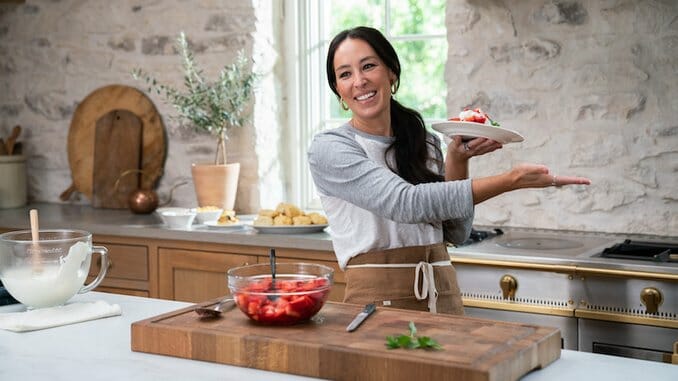
Joanna Gaines
Joanna Gaines is an American interior designer, television personality, and author. She co-hosted HGTV's Fixer Upper and co-founded the lifestyle brand Magnolia with her husband Chip, where she serves as Editor-in-Chief of Magnolia Journal.