Advice Line with Julia Hartz of Eventbrite
Julia Hartz, co-founder of Eventbrite, returns to The Advice Line to help three founders navigate critical business challenges. From balancing dual revenue streams to building print magazine audiences in a digital world, Hartz shares her hard-won wisdom on creating sustainable flywheels and community-driven growth. Her insights bridge the gap between startup idealism and operational reality.
Listen on Spotify
Episode Recap
Intro
Julia Hartz, Eventbrite co-founder, joins Guy Raz to tackle real challenges from founders navigating growth, audience building, and business model tensions. Her advice centers on creating sustainable systems, understanding what each part of your business accomplishes, and leaning into community as a competitive advantage.
Caller 1: Mia Mueller & Pottery to the People
Mia Mueller runs a two-sided pottery business in Germany: educational YouTube videos (50% of revenue) and a tool shop (50%). She feels torn between two different customer bases—entertainment-focused viewers versus serious potters—and wonders if she's running two businesses at once. The channel has 198,000 subscribers, but shop customers are primarily beginners.
Hartz immediately reframes the tension: "It's not should I run two businesses? But what job does each part actually do for me?" She notes that Mia's business is healthy—YouTube vanishing wouldn't kill the shop. That independence is power. The opportunity lies in using YouTube's massive library as evergreen marketing to feed the owned business (the shop). Hartz compares it to content marketing: create useful, engaging material that builds trust, then have a clear backdoor to products. She points to Mark Rober's science videos promoting educational kits as the archetype.
Guy Raz adds that YouTube is Mia's billboard. The platform owns the algorithm, but she owns the shop and customer relationships. Hartz suggests Mia stop viewing the two as competing and start designing a flywheel: content creates insights, insights generate demand, demand drives product sales. The goal isn't 50-50; it's owning as much revenue as possible through direct customer relationships.
Caller 2: Jen Swetzoff & Anyway Magazine
Jen Swetzoff publishes Anyway, a print magazine for tweens and teens launched during the pandemic. With 2,500 subscribers and $200K revenue to date, she and her co-founder have limited time and money to build awareness. The challenge: parents buy the magazine, but kids must crave it. How to bridge that gap and grow in a digital world?
Hartz sees gold in the nostalgia factor. Parents who grew up with Tiger Beat and YM have Pavlovian responses to print magazines—the smell of ink, the ritual of flipping pages. That's emotional equity working in Jen's favor. Hartz asks: when kids flip through the magazine together, what do they gravitate toward first? That insight reveals what to amplify in marketing.
She proposes a three-layer strategy: First, parents are the buyers, and they're on Instagram (ironically, not TikTok). Use short emotional videos showing kids genuinely engaging with the magazine—circling articles, doing crafts, laughing. Capture that rare screen-free moment. Second, eat community: go where maker kids gather. Indie bookstores, craft fairs, girl-centric clubs. Drop copies, build relationships, let the product speak for itself. Third, target micro-influencers—not dancing teens, but bookish kids doing STEM projects, the exact audience who'd value analog content.
Raz suggests partnering with schools, but Jen notes book bans complicate public school donations. Private schools are easier and can be approached one-by-one. Hartz also proposes cross-pollinating with YA authors—cross-promote excerpts, co-create content. The magazine's differentiator is being for all genders, not split by boy/girl sections. That inclusivity could be a selling point.
Hartz ties it back to Eventbrite's playbook: events breathe life into physical products. One of Jen's workshops had modest ticket sales, but Hartz insists she should be doing more—local events where families make the cake together, share photos, and build community. Those attendees become ambassadors.
Caller 3: Anagha Mishra & Auntie Misery
Anagha Mishra makes bake-at-home dessert kits inspired by global flavors—Persian love cake, Peruvian chocolate cake, gulab jamun. The kits are more involved than a box mix (45-55 minutes baking plus cooling), requiring an intentional mindset shift. Her challenge: marketing that the extra time isn't friction; it's the point. How to reframe "work" as "worth it"?
Hartz immediately connects this to Eventbrite's trends: the rise of "granny core" experiences—saunas instead of raves, knitting circles, silent book clubs. People are craving slow, tactile, intentional activities. Anagha's kits sit perfectly in that sweet spot. Hartz's first question: if someone had to describe your kit in one sentence, what would you want them to say? For Anagha, it's "I traveled to Istanbul while baking and eating this." That emotional journey is the story.
Hartz advises doubling down on the time investment as a feature, not a bug. Market the process as intentional slowing—the antidote to fast-paced digital life. The box should evoke the culture before you even open it. She suggests creating an Eventbrite event around the baking experience: host classes where everyone makes the same kit together, share stories, take home a pre-made slice. Repeat customers become a community. Guy Raz adds that Anagha should be front and center on her website—her passion sells the dream. Include QR codes in boxes for discounts on future kits, collect emails, and nurture a loyal following.
Final Thought
Across all three calls, Hartz delivers a consistent framework: understand what each part of your business actually does, build flywheels that connect activities, and create communities that turn customers into advocates. Whether it's YouTube content driving shop sales, print magazines sparking local gatherings, or baking kits becoming cultural experiences, the magic is in designing systems where each node reinforces the others. Most of all, she reminds founders that what feels like friction might actually be your unique advantage—if you reframe it right.
Key Takeaways
- 1Reframe tensions as flywheels: When you feel pulled in two directions, ask what job each part does, then design connections between them.
- 2Own the customer relationship: Platforms (YouTube, social) are billboards; your owned channels (shop, email, events) capture real value.
- 3Nostalgia is a competitive advantage: Analog products in a digital world benefit from deep emotional equity. Lean into the sensory experience.
- 4Community transforms products: An event, a magazine, a baking kit becomes extraordinary when it connects people. Build that into the experience.
- 5Time is not friction when it's intentional: In an attention-starved world, the willingness to slow down becomes a selling point, not a drawback.
Founders Featured
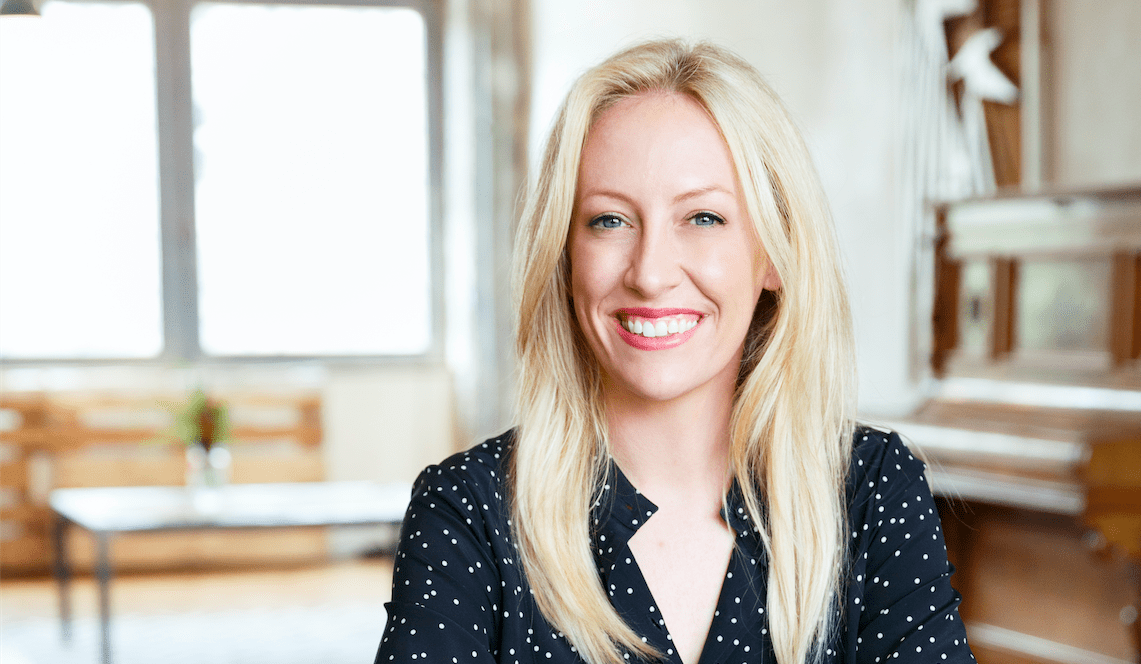
Julia Hartz
Julia Hartz is the co-founder and CEO of Eventbrite, the global self-service ticketing platform that has empowered millions of event creators. She led the company from a startup idea to a 2018 IPO and remains a vocal advocate for entrepreneurs and women in technology.

Anagha Mishra
Anagha Mishra is the Founder and Chief Flavor Officer of Aunty Misri, a company that creates globally-inspired bake-at-home dessert kits. An engineer turned baker, she''s on a mission to revolutionize desserts with unique flavors. She was a 2024 Jabza Fellow.

Jen Swetzoff
Jen Swetzoff is the co-founder of Anyway Magazine, a digital platform that redefines parenting media with honest stories and practical advice. Based in Westport, Connecticut, she launched the publication with her best friend Keeley McNamara to build a community where parents feel seen and supported.

Mia Mueller
Mia Mueller is associated with Pottery to the People. Mia is the founder and owner of Berlin-based pottery studio Pottery to the People. She is an artist.
Related Companies
Eventbrite
Eventbrite is an American live events marketplace and platform that allows users to browse, create, and promote local events. Launched in 2006 and headquartered in San Francisco, it democratized ticketing by making it free to publish events of any size.
1 episode
Aunty Misri
Aunty Misri is a boutique bakery brand specializing in gourmet bake-at-home dessert kits and artisanal treats inspired by global flavors. Founded by Anagha Mishra in India, the brand creates experiential baking experiences with pre-measured ingredients and globally inspired flavors like Peruvian Noir Chocolate and Kesari Gulab Jamun.
1 episode

Anyway Magazine
Anyway Magazine is a gender-inclusive print publication for tweens and teens (ages 9-15). It blends health education, cultural stories, and activities to help young readers navigate growing up with honesty and humor.
1 episode
Pottery to the People
Pottery to the People is an education company that provides online pottery courses for beginners. Offering classes on potter's wheel, glazing, and coiling techniques, it inspires students to create ceramic art from home.
1 episode