Taylor Guitars: Kurt Listug and Bob Taylor. From $3,700 Shop to Global Icon
Kurt Listug and Bob Taylor built Taylor Guitars from a $3,700 shop into a global brand. Their success came from innovative guitar design, controlling the entire production process, and focusing on sound quality. They pushed the industry forward by adopting CNC technology early and leading the way in sustainable tonewood sourcing. The result: instruments that changed expectations for acoustic guitars.
Listen on Spotify
Episode Recap
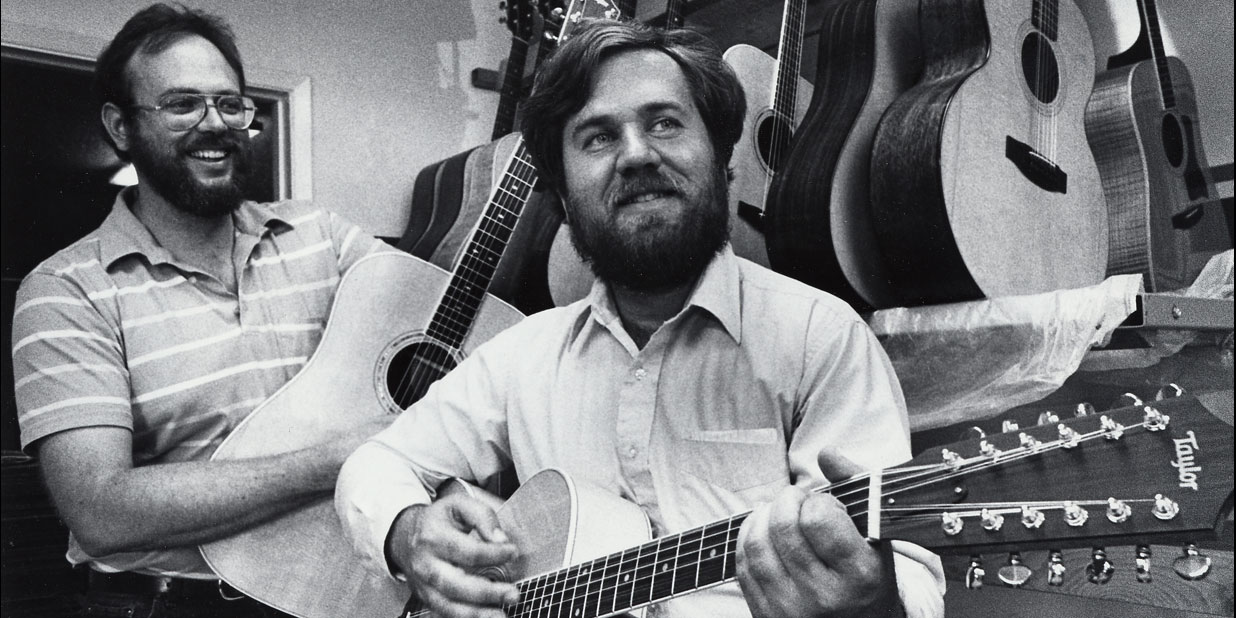
Kurt Listug and Bob Taylor met in the late 1970s at a small guitar shop in San Diego called the American Dream. That shop, which they eventually bought for $3,700, became the unlikely birthplace of what would grow into one of the world's most respected acoustic guitar brands.
From Resawing to Revolution
Their early days were defined by necessity. With limited funds, they had to make every board count. They started by resawing thin woods by hand, learning how guitar tops and backs respond to thickness and moisture. That hands-on education became the foundation of their approach: understand the material so deeply that you can shape it into something extraordinary. They didn't set out to build a factory; they set out to build better guitars, and everything else followed.
Control the Process, Not Just the Parts
Most guitar makers outsource major components. Taylor took a different path. They brought everything in-house—from neck carving to finish application. Their early investment in CNC equipment wasn't about automation for its own sake; it was about precision and repeatability. Kurt and Bob realized that if you could control the entire chain, you could maintain consistency while scaling. That vertical integration is now considered industry-leading, but back then it was a huge risk. They bet on themselves, and it paid off.
The Sound That Changed Everything
While competitors focused on aesthetics, Taylor obsessed over tone. They developed the proprietary Taylor pickup system that made their electric-acoustic guitars sound true to their acoustic voice. The breakthrough came when they treated the pickup not as an add-on but as an integral part of the instrument's design. That attention to acoustic-electronic integration won over performers who needed stage volume without feedback or synthetic tone. It became a defining feature.
Sustainability as Business Strategy
Long before "sustainable" was a marketing buzzword, Taylor was dealing with the reality of tonewood scarcity. They invested in ebony processing in Africa, bought a rosewood plantation in Costa Rica, and developed alternative tonewoods like ovangkol. This wasn't activism; it was supply chain security. By controlling the wood flow and managing forests responsibly, they protected their future while appealing to conscious consumers. The message: doing good can also be good business.
Thenumbers Tell the Story
Today, Taylor produces around 800 guitars daily across multiple facilities. They've trained hundreds of luthiers who carry the brand's standards worldwide. The company remains privately held by its employees through an ESOP, a structure that aligns everyone toward long-term quality rather than short-term returns. That ownership model reinforces their culture of craftsmanship.
Taylor Guitars proves that manufacturing can thrive in America by combining old-world attention to detail with modern efficiency. Kurt Listug and Bob Taylor built more than a guitar company—they built a system that ensures every instrument leaving the factory carries the same obsession that started in that $3,700 shop.
Key Takeaways
- 1Master the material first: Taylor's founders learned wood behavior by hand before scaling; deep material knowledge prevents costly mistakes later.
- 2Vertical integration beats outsourcing: Controlling every step from neck carving to finish application ensures consistency and eliminates supplier dependencies.
- 3Sustainability is supply chain security: Investing in tonewood forests and alternative species protects your business from scarcity while appealing to conscious buyers.
- 4Build systems, not just products: Taylor's CNC investment wasn't about replacing luthiers but about achieving precision that lets human craftsmen focus on what machines can't.
- 5Employee ownership aligns quality: An ESOP structure ties everyone's success to the long-term reputation of the brand, not quarterly targets.
Founders Featured

Kurt Listug
Kurt Listug co-founded Taylor Guitars in 1974 with Bob Taylor, turning a small guitar shop into a global leader in acoustic instruments. A San Diego native, Listug served as CEO and guided the company's innovative approach to guitar design and manufacturing.
Bob Taylor
Bob Taylor co-founded Taylor Guitars in 1974 with Kurt Listug. The El Cajon, California company builds acoustic and electric guitars. Taylor started as a luthier and grew the business from a small shop into a major instrument manufacturer.