Advice Line with Chris Riccobono of UNTUCKit
Chris Riccobono returns to the Advice Line with an unvarnished update on UNTUCKit: tariffs, wholesale expansion, and the operational grind of keeping a growing apparel brand moving. Three callers then push him on harder problems. Adrian Alvarez wants Aero Shorts to outgrow its volleyball niche and compete with bigger athletic brands. Preet Anand is searching for awareness channels for Snug Safety that fit a trust-based, older demographic. Derek needs a real plan for Hockey Ninja now that NHL clearance is in hand, and he is choosing between social media, equipment managers, and a player partnership.
Listen on Spotify
Episode Recap
Intro
Chris Riccobono returns to the Advice Line with a candid update on UNTUCKit and a clear-eyed view of what it takes to grow a second brand. After a long opening conversation about tariffs, wholesale, and the messy reality of scaling apparel, the episode shifts to three callers who are all trying to turn early traction into bigger markets.
Caller 1: Adrian Alvarez & Aero Shorts
Adrian is a college sophomore who built Aero Shorts into a $400,000 DTC brand in two years. His question is how to escape a volleyball-only perception and compete with bigger athletic brands. Chris immediately pushes back against the temptation to target everyone too early. He says Aero Shorts should keep leaning into its tribe, test TikTok and influencer storytelling, and avoid raising cash before it has a sharper brand message. The coaching here is less about virality and more about making the positioning specific enough that marketing spend actually compounds.
Caller 2: Preet Anand & Snug Safety
Preet’s challenge is awareness for a trust-based senior safety app. The conversation quickly becomes a debate about paid social versus earned and targeted audio. Chris argues that Snug Safety is a poor fit for ordinary social ads and suggests SiriusXM, podcast reads, local media, and geriatrician outreach instead. Preet offers a useful counterpoint: word of mouth and NPR coverage have already driven measurable lifts. The exchange highlights that some products win through repeated exposure in emotionally safe environments rather than attention-market bidding.
Caller 3: Derek & Hockey Ninja
Derek runs Hockey Ninja as a side hustle and now has NHL clearance, so he is choosing between social media, equipment-manager relationships, and player endorsements. Chris treats this as a product-credibility problem more than a marketing problem: if the visor is genuinely better, get it on a player, film the proof, and let optics do the work. He also makes the case for a smaller equity-style deal with one credible player over scattered sponsorship spending. Derek leaves with a clearer decision framework: choose one path, measure it, and avoid splitting a limited budget across everything.
Final Thought
The common thread across all three calls is that more marketing budget does not fix a fuzzy go-to-market story. Whether the product is hybrid shorts, a safety app, or hockey optics, the founders who win are the ones who match the channel to the buyer’s trust model and keep refining the story until it can be repeated clearly by someone else.
Key Takeaways
- 1Sharpen the tribe before widening the target: A broad message like 'shorts for everyone' is hard to scale when big brands already own that positioning.
- 2Match the channel to the trust model: Trust-based products often perform better on local media, niche audio, and professional referrals than on standard paid social.
- 3One credible proof point beats scattered sponsorship: NHL clearance is most useful if it leads to one visible player endorsement, not dozens of small experiments.
- 4Raise cash only after the story converts: Marketing spend only compounds when the brand message is specific enough to measure and repeat.
More from Chris Riccobono, Adrian Alvarez, Preet Anand, Derek
Founders Featured
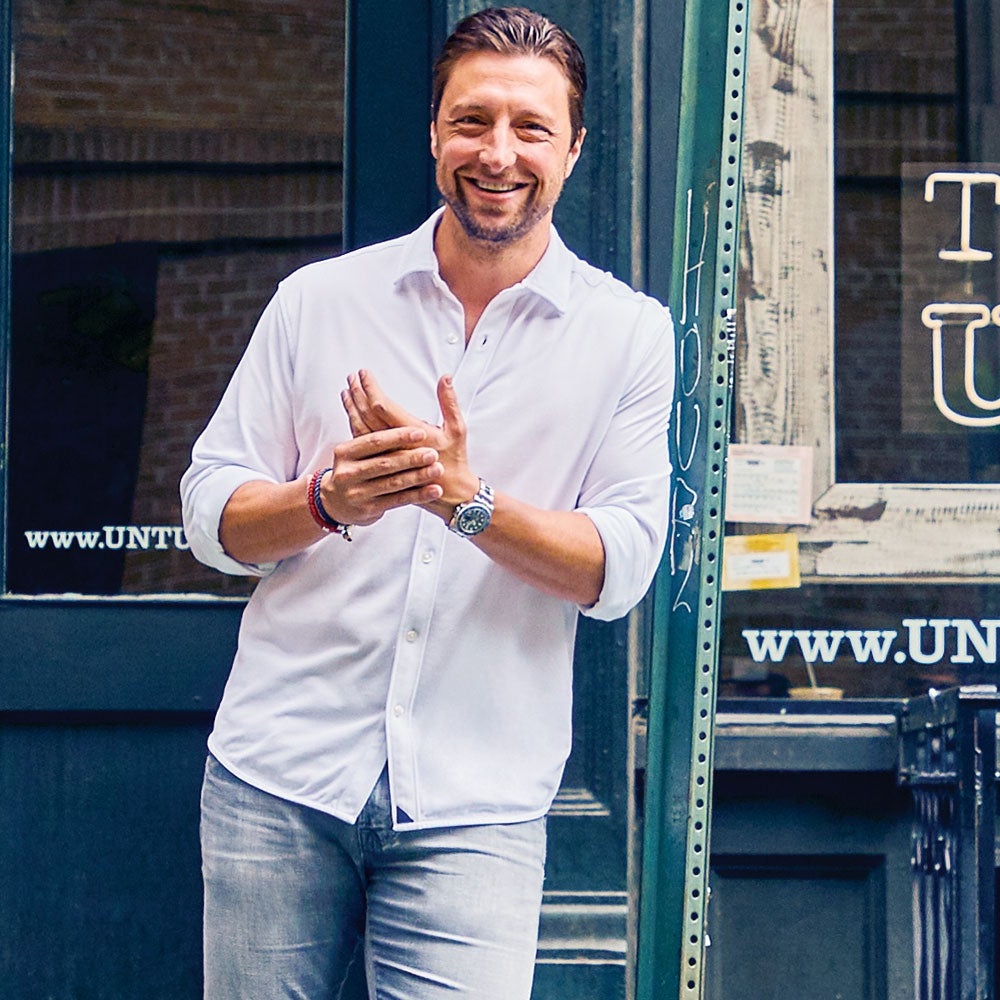
Chris Riccobono
Chris Riccobono co-founded and led UNTUCKit, the men's brand known for shirts designed to be worn untucked. A Providence College grad and Columbia MBA, he built the company from a side hustle at GE Healthcare into an 80-plus-store phenomenon. He later co-founded Greatness Wins performance apparel.
Adrian Alvarez
Adrian Alvarez founded Aero Shorts as a high school senior and grew it into a profitable DTC athleisure brand focused on affordable hybrid shorts, built through bootstrapped product development, overseas sourcing, and a repeat-customer base driven by paid social and short-form content.
Preet Anand
Preet Anand is the CEO and co-founder of Snug Safety, a daily check-in service for seniors who live alone. He built the trust-based app after hearing from a customer who needed help for moments when she could not respond herself, and grew it through word of mouth, Google, and earned media.
Derek
Derek is the founder of Hockey Ninja, a hockey equipment company making visors and full-face titanium hybrid shields. He runs the business as a side hustle while working in consumer electronics, using his optics background to sharpen impact resistance, clarity, and anti-fog performance.
Related Companies

UNTUCKit
UNTUCKit is a fashion brand. It makes untucked dress shirts. Every piece is cut to fall right at the hip, no tucking required. No stiff, scratchy fabric. Just simple, polished style for everyday wear.
2 episodes
Aero Shorts
Aero Shorts is an affordable athleisure and lifestyle brand founded by Adrian Alvarez that makes hybrid shorts designed for multiple occasions. The brand grew from a high school sourcing experiment into a direct-to-consumer business focused on price-conscious young athletes and everyday wearers. Its core product promise is versatile, fast-drying shorts at an intentionally low price point, supported by repeat customers and short-form social marketing.
1 episode
Snug Safety
Snug Safety is a daily check-in service for seniors who live alone. It sends reminders to confirm a person is okay, notifies emergency contacts if a check-in is missed, and offers an upgraded alarm plan with phone-based outreach and emergency-services coordination. The company was built around an emotional, trust-based use case rather than a generic health-tech feature, and it has grown mainly through word of mouth, Google search, senior-focused influencer tests, and earned media.
1 episode
Hockey Ninja
HockeyNinja is a US-based hockey equipment brand that designs and sells affordable performance visors, full-face hybrid shields, cages, goalie neck guards, and related accessories for amateur and professional players.
1 episode