Advice Line with Randy Hetrick of TRX
The HIBT Advice Line with Randy Hetrick of TRX delivers actionable, no-fluff solutions to listener fitness roadblocks. He shares adaptable bodyweight training tips for every skill level, plus strategies for building sustainable movement habits even on the busiest, most unpredictable schedules. Listeners leave with personalized, equipment-free guidance to upgrade their strength and mobility routines without expensive gym memberships.
Listen on Spotify
Episode Recap
Intro
Guy Raz brings TRX founder Randy Hetrick back to the Advice Line to help three founders with very different scaling and positioning problems. The callers span beverages, pies, and adaptive clothing, but each one is hitting a growth wall where product-market fit, capital structure, or customer focus needs a sharper answer. Randy’s experience taking TRX from a garage-born startup through ownership changes, a buyback, and back into growth makes him a particularly useful voice for these moments.
Caller 1: Paige Say & Benny
Paige Say is preparing Benny for a national Target launch after building a profitable, caffeine-conscious energy drink brand in Canada. Her real question is how to scale demand and operations fast without losing control of the business or overloading a small team. Randy’s advice is direct: protect profitability as long as possible, use the Target partnership as proof of concept rather than an automatic growth lever, and make sure she has experienced retail advisors before she depends on big-box velocity. He also warns that entering a massive retailer too early can create a finance-and-execution mismatch that kills brands that were previously healthy.
Caller 2: Kerri Jones & Peaked Pies
Kerri Jones runs Peaked Pies, a Whistler-based Australian meat pie brand that has outgrown its bootstrap origins and is now exploring franchising and a strategic investor. She wants to know what to look for in a partner and whether she’s ready to dilute ownership before she has full operational clarity. Randy pushes her to document the model first, avoid rushing into capital simply because growth feels urgent, and prioritize operational expertise over money alone. His best suggestion is to look for a semi-retired operator who actually understands food franchising, rather than a financial investor who only claims strategic value.
Caller 3: Katherine Perry & Adapt Apparel
Katherine Perry co-founded Adapt Apparel after seeing how institutional-looking adaptive clothing failed her parents’ dignity and comfort. She is deciding whether to keep broadening into hospitals, care facilities, and retail, or to narrow focus while the brand is still new. Randy advises leaning into the institutional channel first, where the need is clearest and the story is strongest, instead of chasing broader retail prematurely. He also highlights her logo as a genuine brand asset and reminds her that early traction in the right places matters more than scattered presence everywhere.
Insights from the Experts
Randy returns to a few constants across all three calls: profitability buys optionality, big partnerships deserve hard terms scrutiny, and focus beats reach until the model is proven. He also stresses that the best early-stage advisors are operators, not capital sources, and that a brand’s sharpest advantage is usually solving a specific problem for a specific audience.
Final Thought
The common thread across this Advice Line is control: control over unit economics, control over partner selection, and control over brand focus. Randy’s best advice is to protect that control while using outside help only when it directly removes a bottleneck the founders cannot solve themselves.
Key Takeaways
- 1Bootstrap before outside capital: Randy Hetrick intentionally avoided venture capital for TRX’s first decade, reinvesting profits to preserve brand control and prioritize product quality over short-term revenue.
- 2Fix distribution misfits early: A bad big-box partnership nearly sank TRX; replacing it with direct-to-consumer sales became the engine for sustainable growth.
- 3Scale operations ahead of demand: Building distributed manufacturing and frontline training early prevented supply-chain and customer-experience breakdowns during growth surges.
More from Randy Hetrick, Paige Say, Kerri Jones, Katherine Perry
Founders Featured
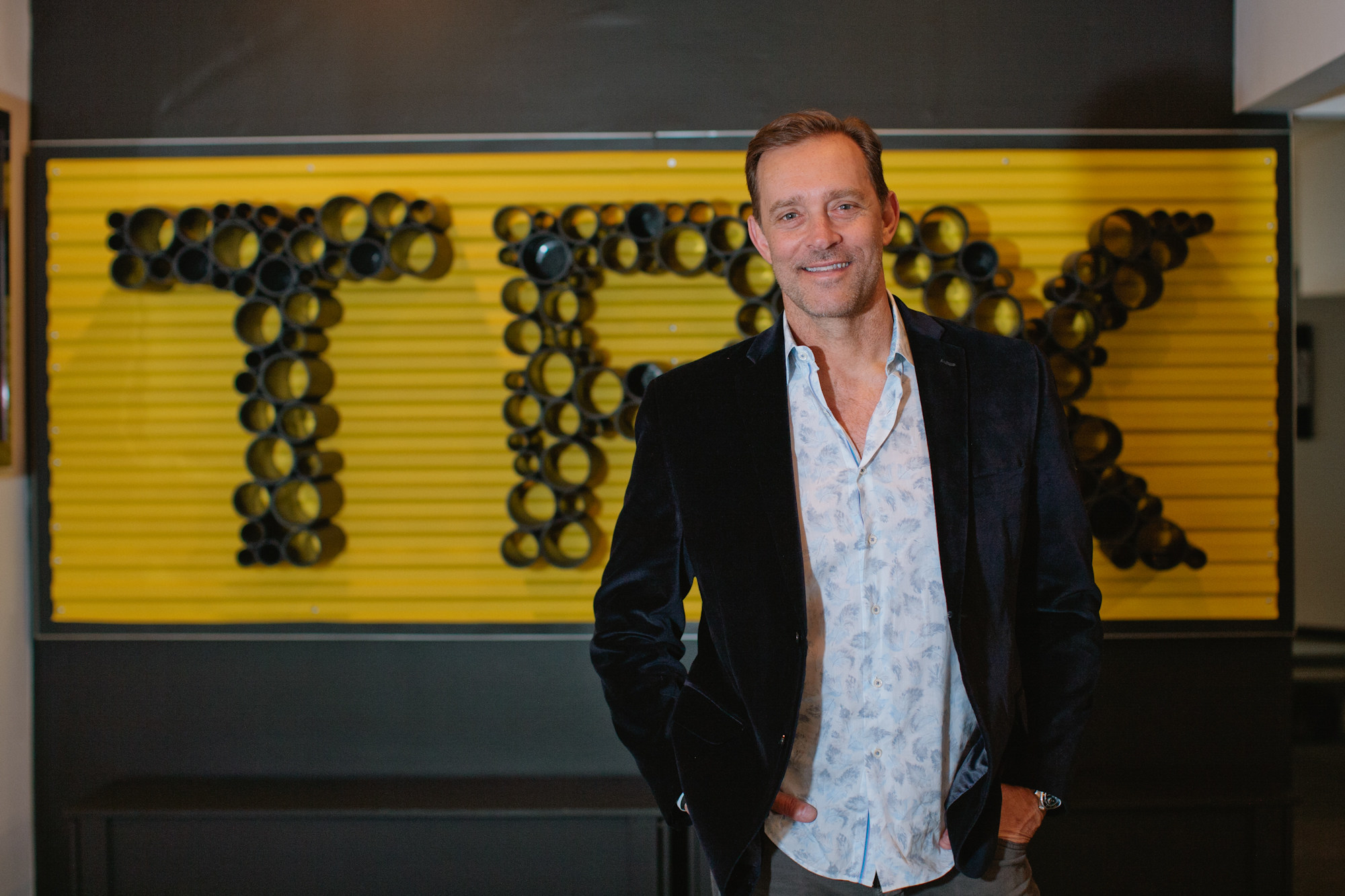
Randy Hetrick
Randy Hetrick founded TRX Training in 2004 after a 14-year career as a Navy SEAL and earning his MBA from Stanford. He invented the TRX Suspension Trainer in 1997 while deployed overseas, turning a field problem into a global fitness brand.
Paige Say
Paige Cey is Co-Founder and Co-CEO of Benny. The Vancouver-based brand makes naturopathic-inspired energy drinks for caffeine-conscious consumers. She runs it with co-founder Julie Letizia. That was the break. The pair are 2025 RBC Canadian Women Entrepreneur Awards finalists. She recently appeared on the How I Built This podcast to discuss building the fast-growing Canadian beverage brand.

Kerri Jones
Kerri Jones is the Co-Founder and President of Peaked Pies, an Australian bakery cafe in Whistler, BC that she founded with her husband Alex Relf in 2013. Originally from Australia, Kerri brings authentic meat pie traditions to Canada.

Katherine Perry
Katharine Perry co-founded Cornwall, Ontario’s Adaptt Apparel with William Lecky. Three sisters. Fifty years of Texas heat, cowboy boots, memories. The adaptive clothing line came from her time caring for her aging parents. Adaptt makes functional, accessible pieces for people with mobility and cognitive challenges. Perry and Lecky appeared on NPR’s *How I Built This*.
Related Companies

trx
TRX Training is the pioneering force behind suspension training, founded by former Navy SEAL Randy Hetrick in 2005.
2 episodes

benny
Benny is a Canadian wellness-driven energy drink brand co-founded by Paige Cey and Julie Letizia in 2021. The company produces naturally formulated energy drinks with adaptogens and no added sugar.
1 episode

peaked pies
Peaked Pies is a Canadian bakery cafe specializing in gourmet Australian meat pies, founded in 2013 in Whistler, British Columbia.
1 episode
adapt apparel
Adapt Apparel is an adaptive fashion brand founded in 2022 that designs clothing with accessibility and dignity at its core. The company creates garments that support individuals of all abilities.
1 episode